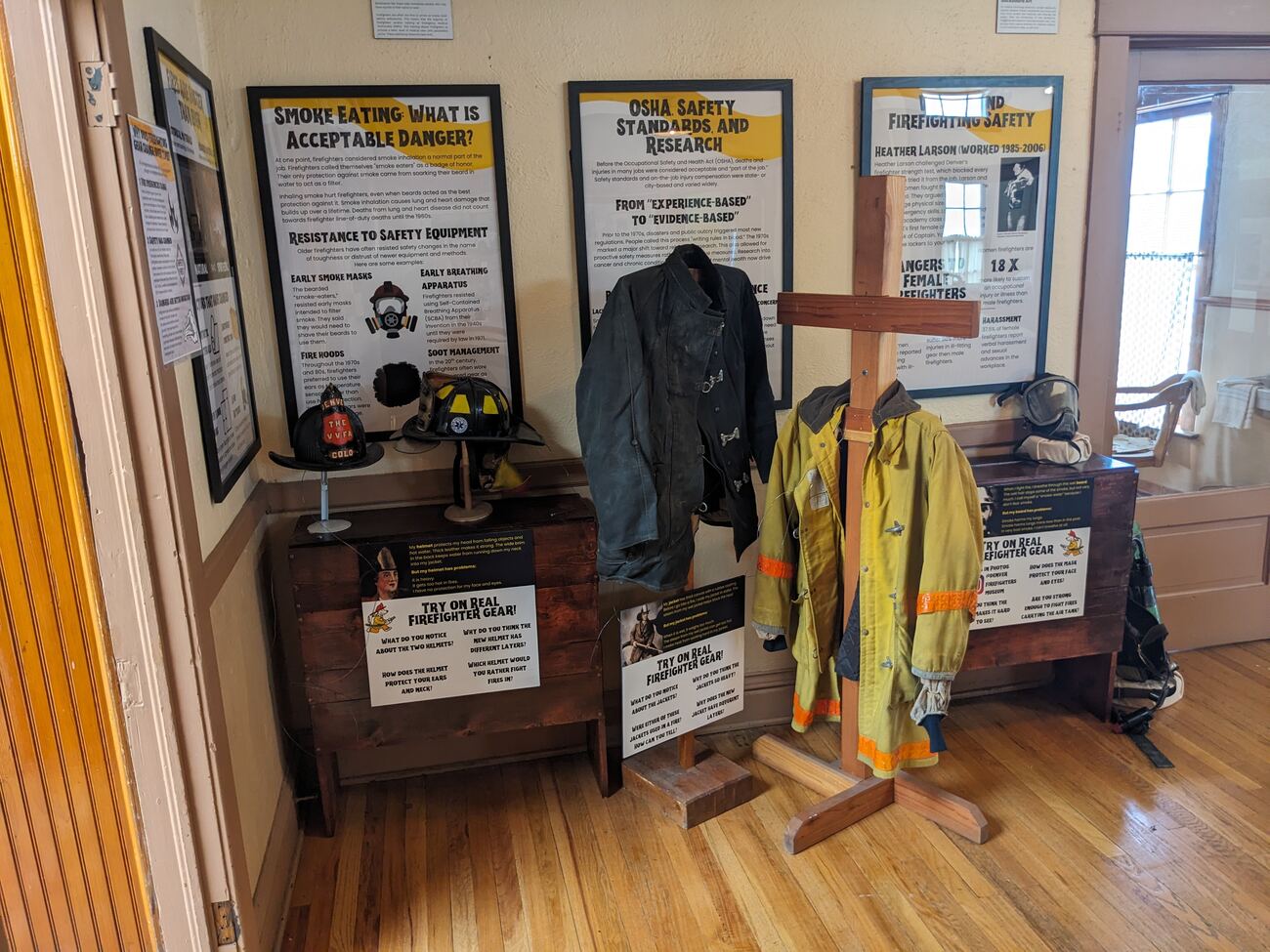
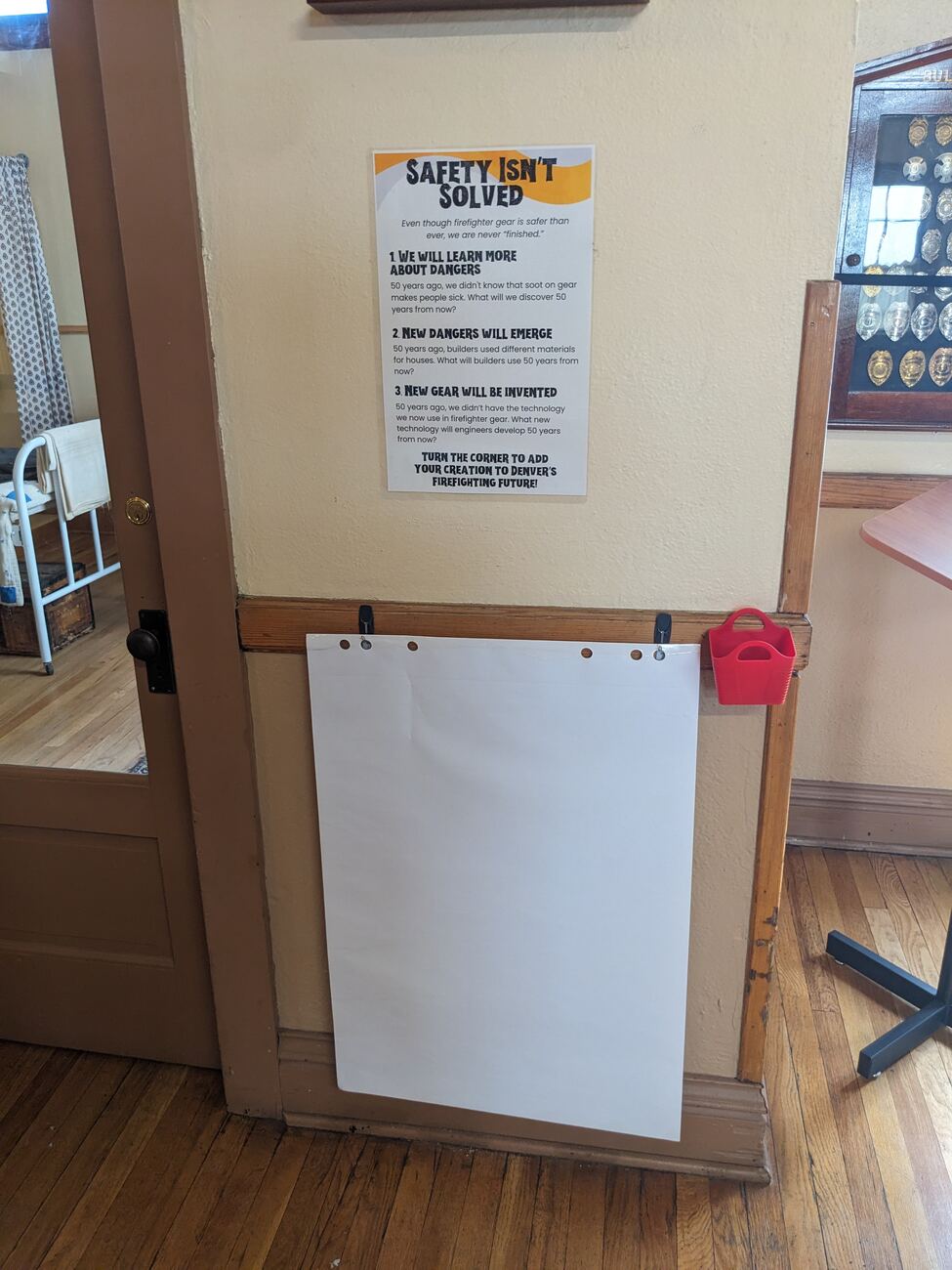
Designed for families to grasp the evolution of safety equipment. "Safety Isn't Solved"
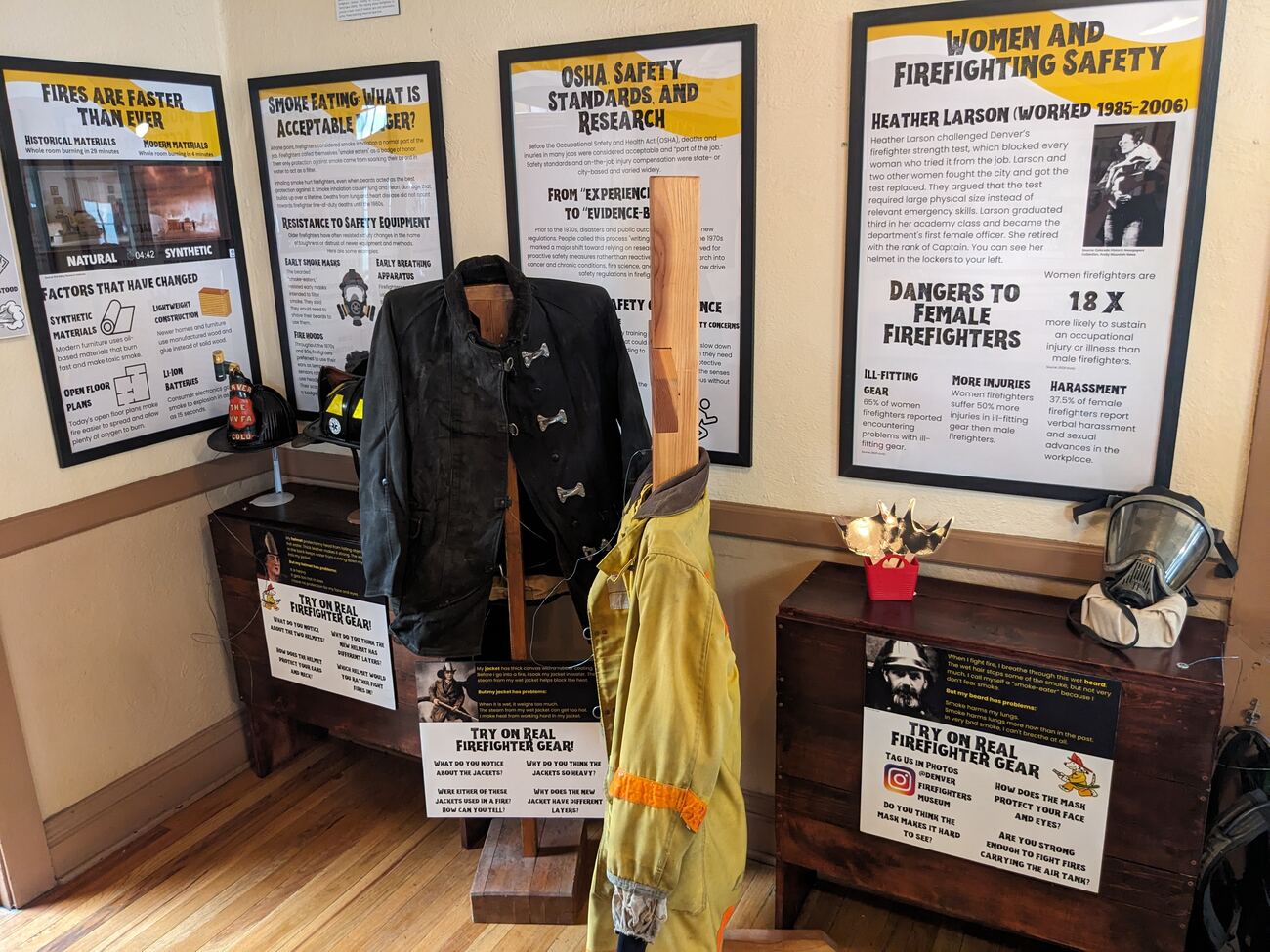
Show information more than one way: visually, tactilely, through data. Visitors explore the gear with their hands, bodies, noses, eyes and minds to understand its meanings.
Lead with the object and layer the labels so the object generates the question before any text answers it. Visitors explore through the objects and the questions those objects raise, which gets guests talking.
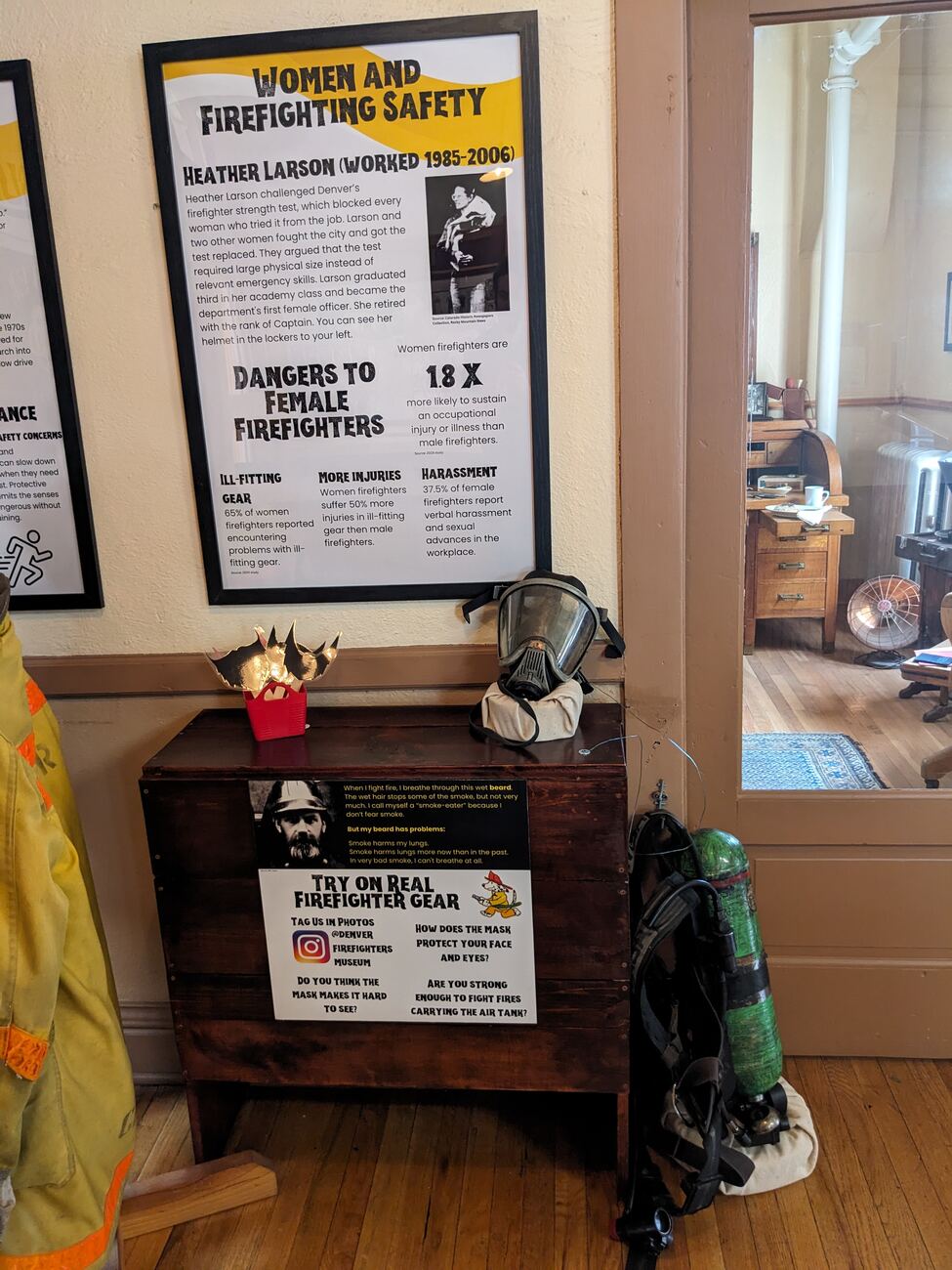
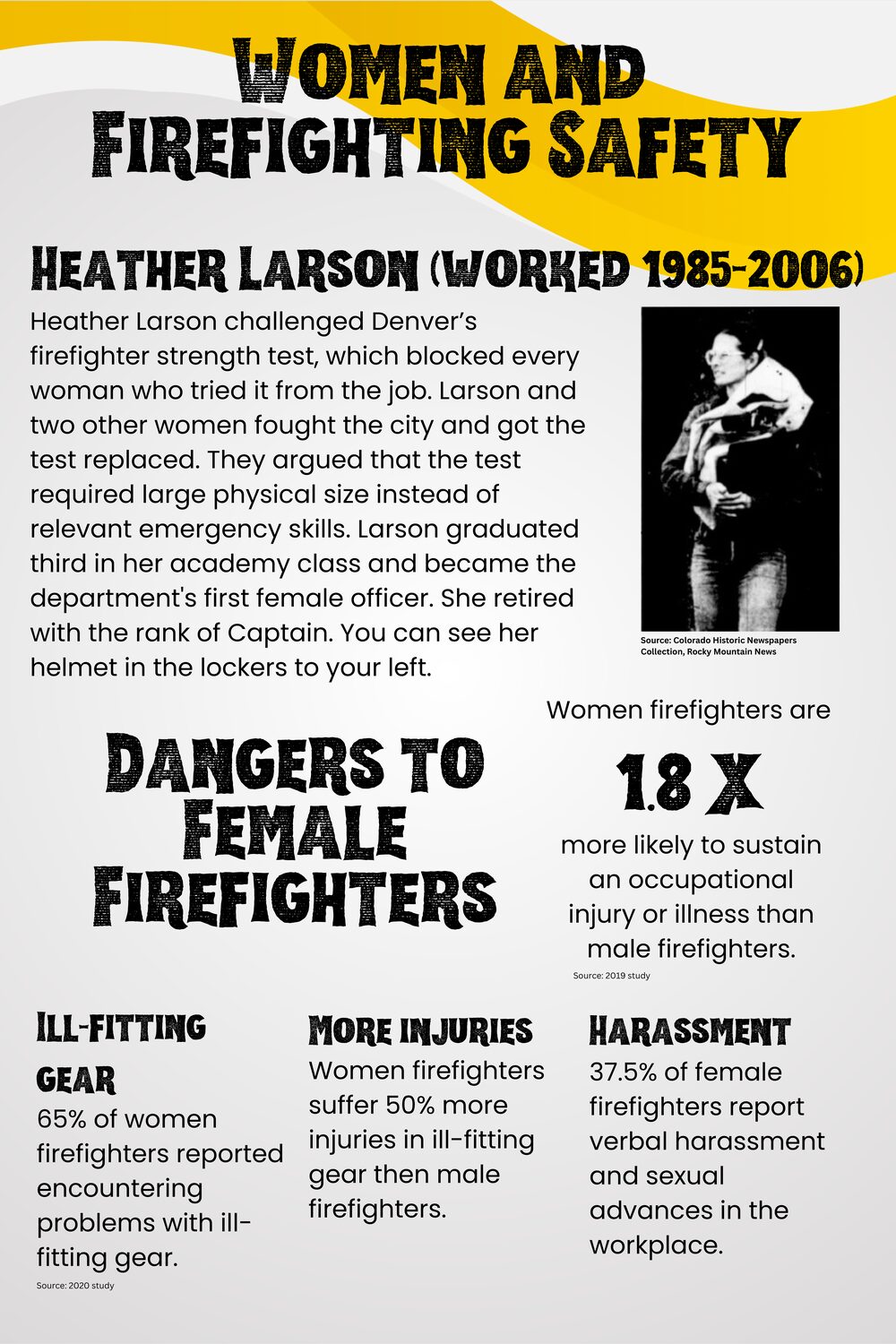
The Exploratorium's design principles engage girls in STEM exhibits by making them accessible. This exhibit uses two-person try-on stations, open questions with no single right answer, and Heather Larson featured as a female protagonist.
As with many projects, what seemed like a great idea on paper failed to engage visitors when the prototype went up. I first designed four stations, each built around a flip-panel "decision tree" with a real historical fork, three possible paths, and a reveal connecting the choice to what actually happened. I observed from the prototype that, by that point in a visit, guests already had reading fatigue. Instead, they skipped my activity and focused on handling the objects and talking to each other. So, I reworked the exhibit to focus on the interaction and conversation naturally arising from the objects.
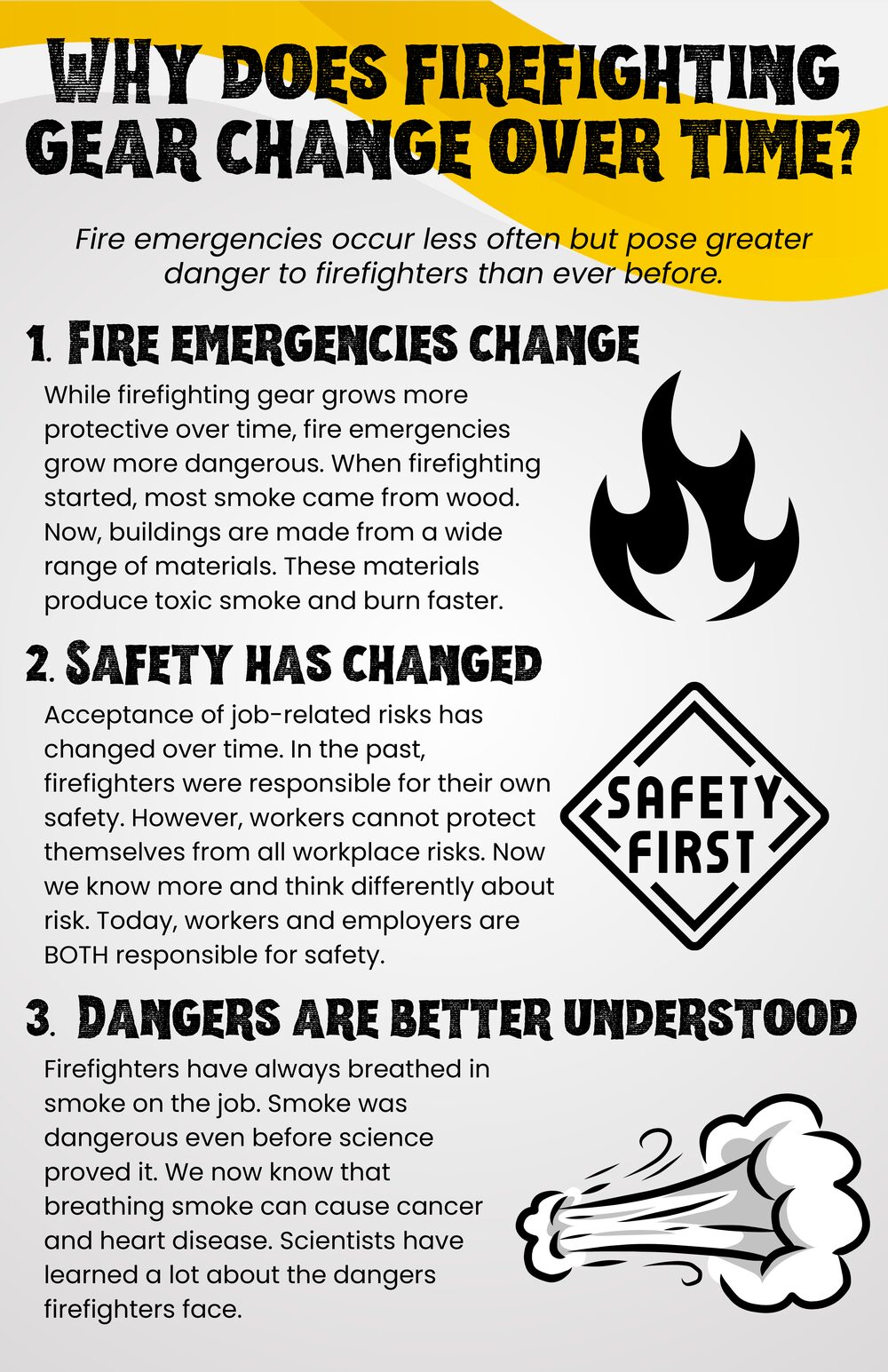
Kid-oriented panels use EDGE's body-movement and collaboration engagement: do first, ask questions, no reading required to participate. Adult panels allow parents and facilitators to answer the bigger questions about why gear changes over time, giving more meaning to the objects than simple museums labels can.
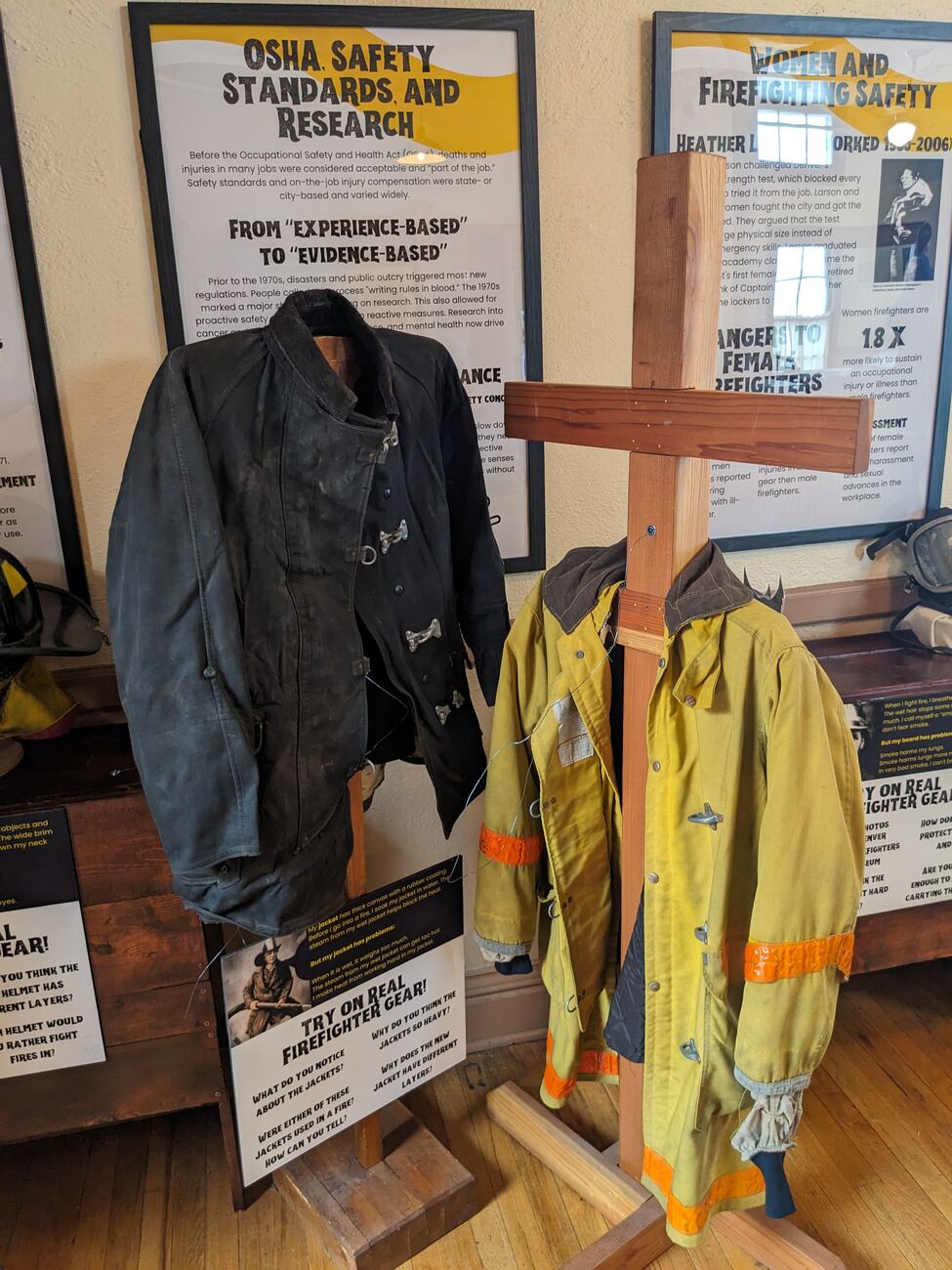
One of EDGE's 9 attributes: whole-body interaction, not just hands-only manipulation. Pulling on the coat lets visitors feel the weight before reading about it.
Illustrated firefighters voicing the real problems with older gear give younger visitors an emotional way into an engineering problem, not just a label to read.
OBL asks for "conversational tone... tested by reading aloud." The jacket talks in first person—"My jacket has thick canvas..."—at about a 4th-grade level, so a parent isn't translating a label into kid-language on the spot.
The exhibit now builds on what visitors already do. It doesn't need a separate interactive: putting the gear on starts the conversation.


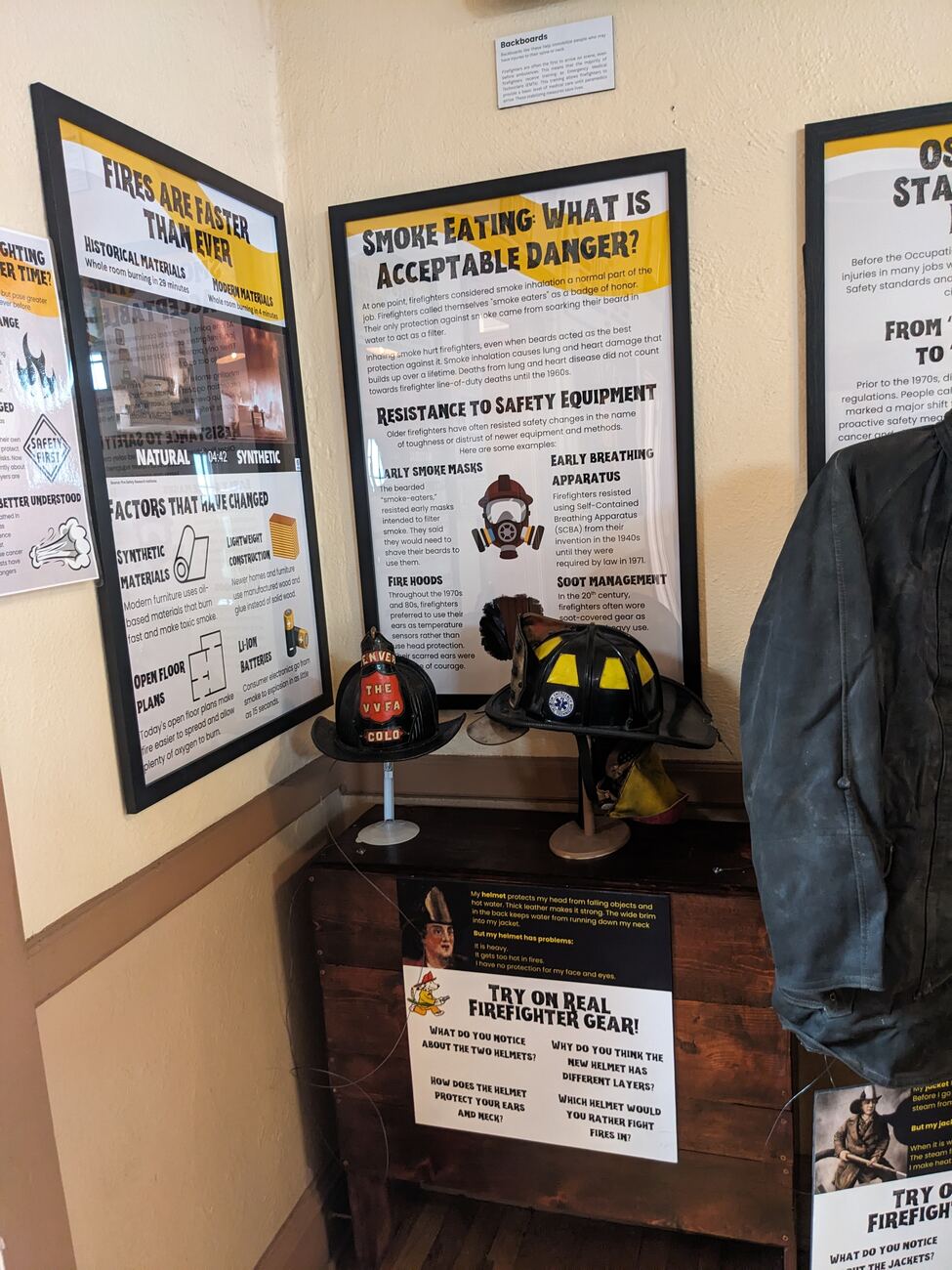
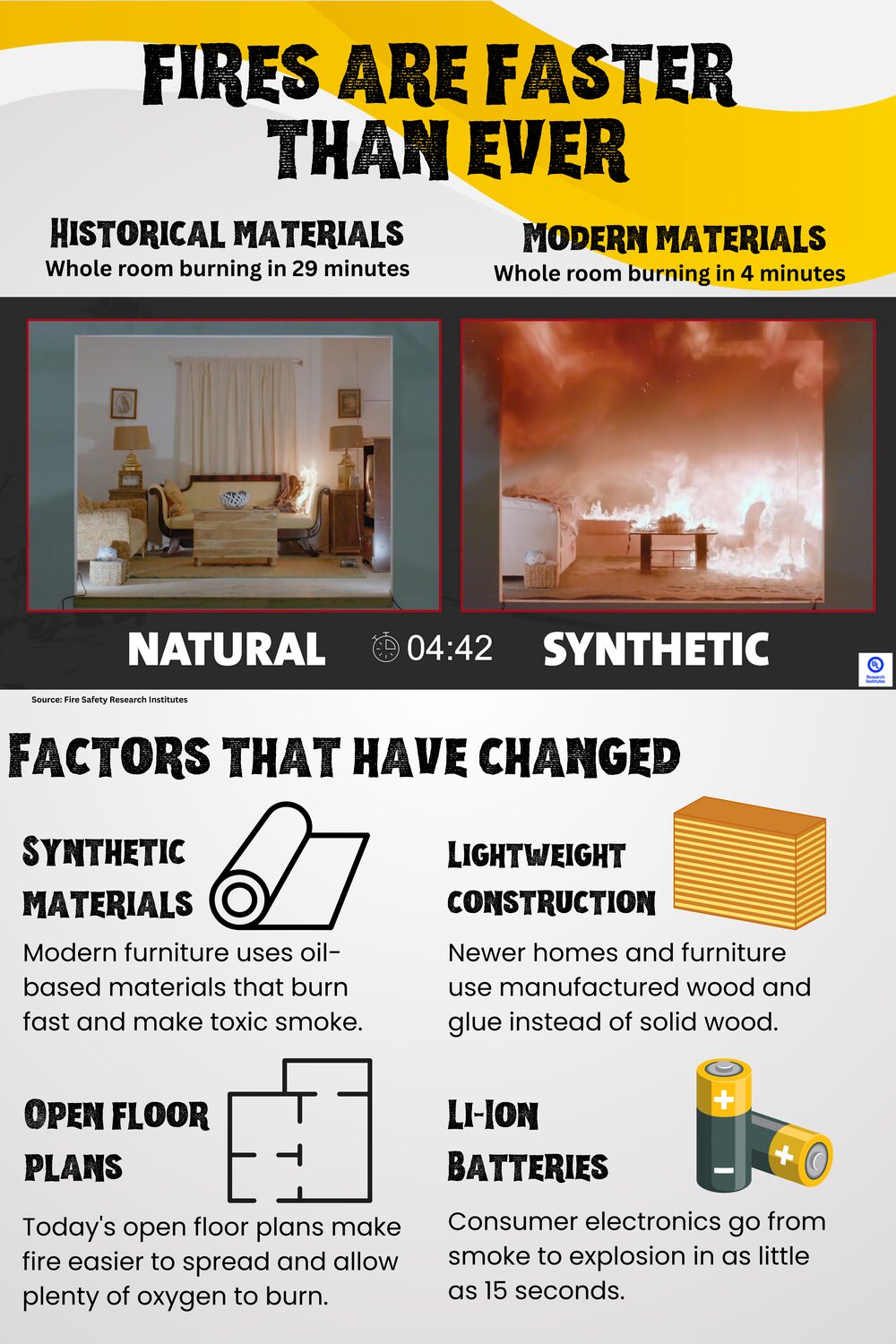
UDL's first principle: show the same idea more than one way. The kid stations argue "safety isn't solved" through touch and emotion; these panels make the same argument with history, images and data.
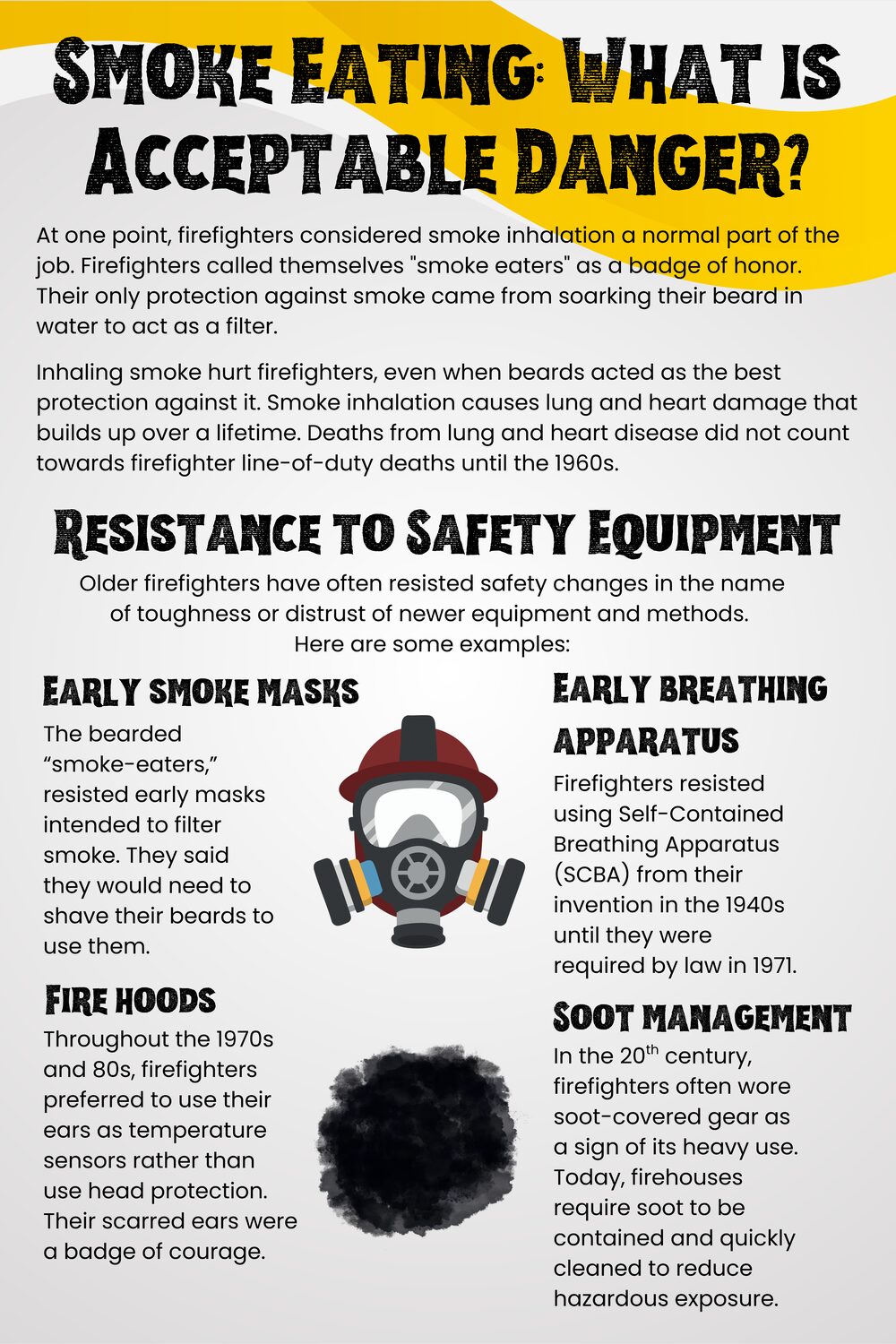
OBL asks for concrete language over abstraction. "29 minutes to 4 minutes" and a cited 1971 NFPA mandate are both checkable, sourced right on the panel.
These panels work for adults with and without children accompanying them by providing complementary information to the objects and addressing the "big idea."


This exhibit puts the objects first and stays out of their way. Object-Based Learning, Universal Design for Learning, and EDGE all point the same direction: people remember what they touch, try on, and talk through.
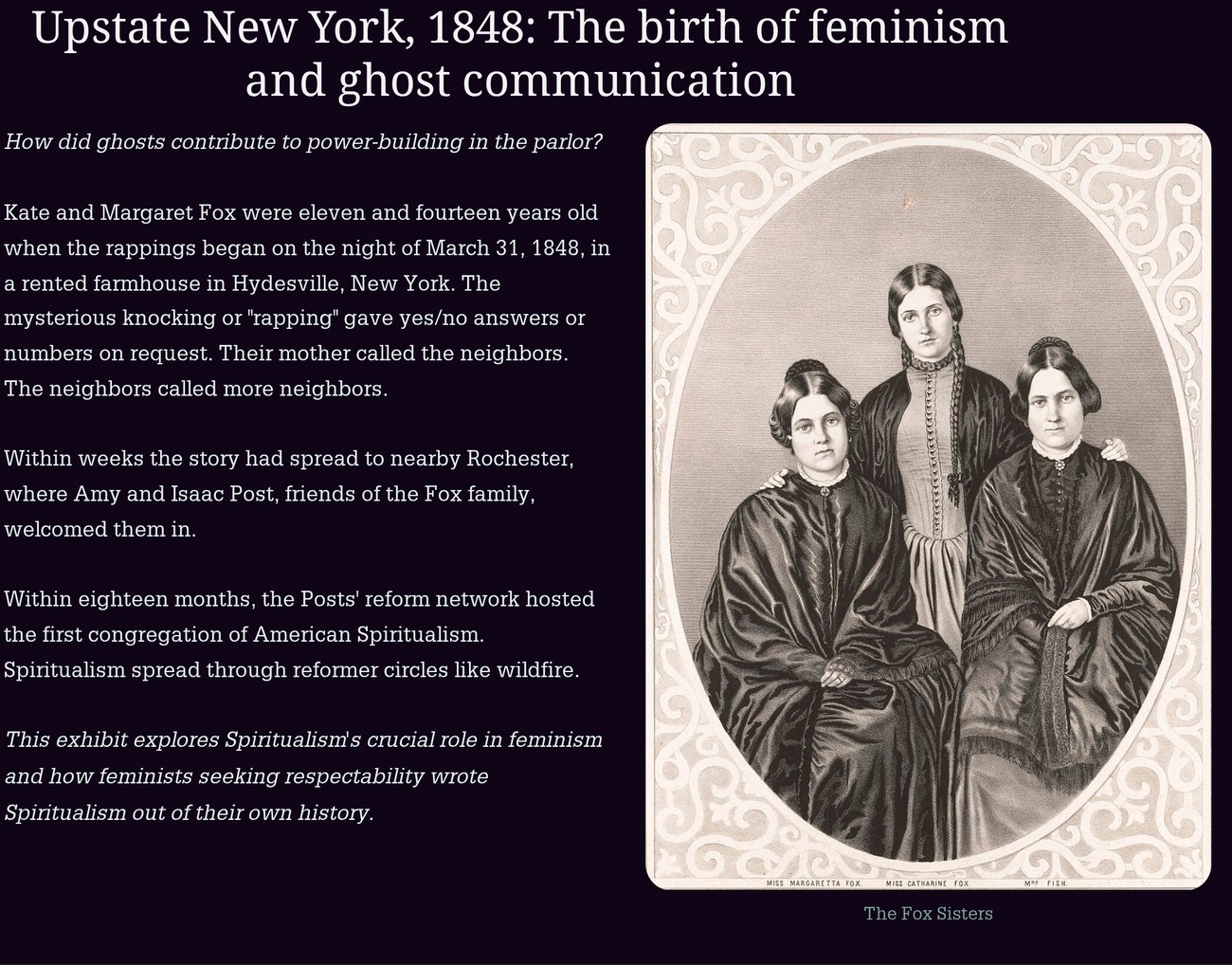
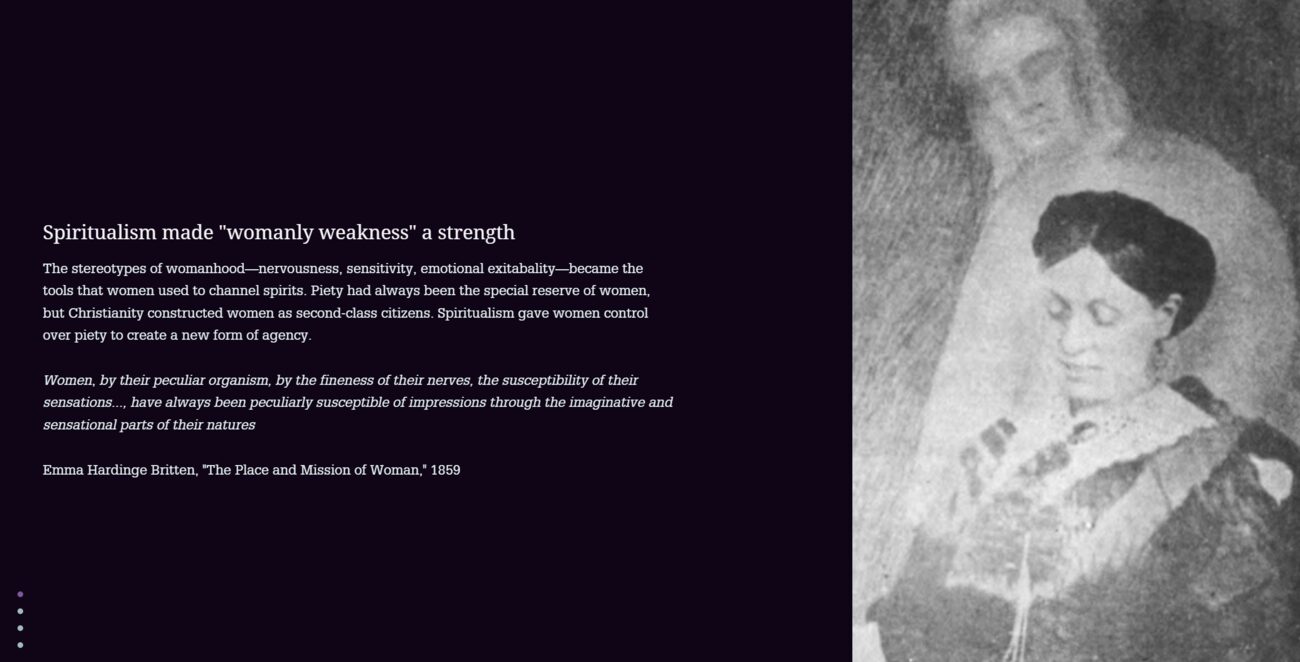
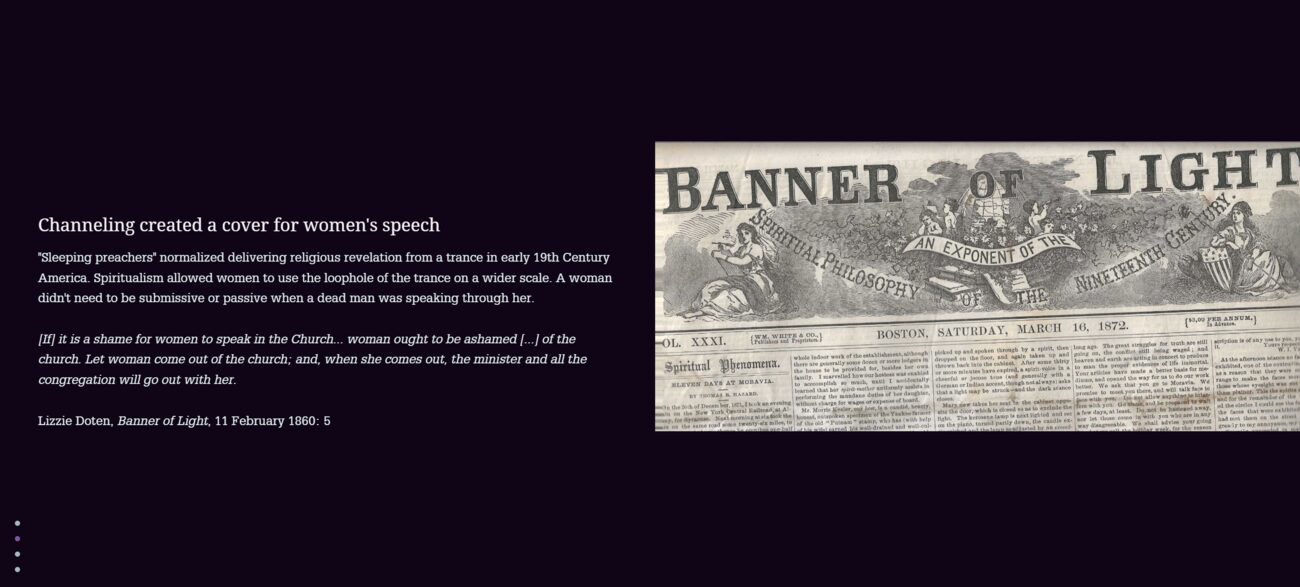
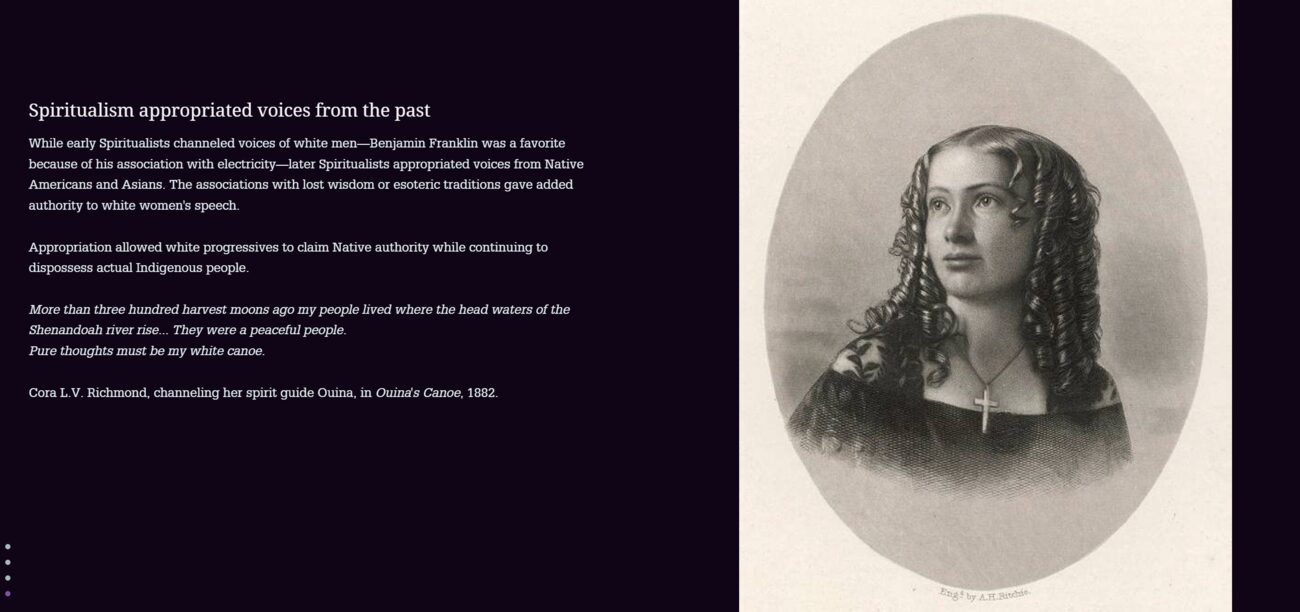
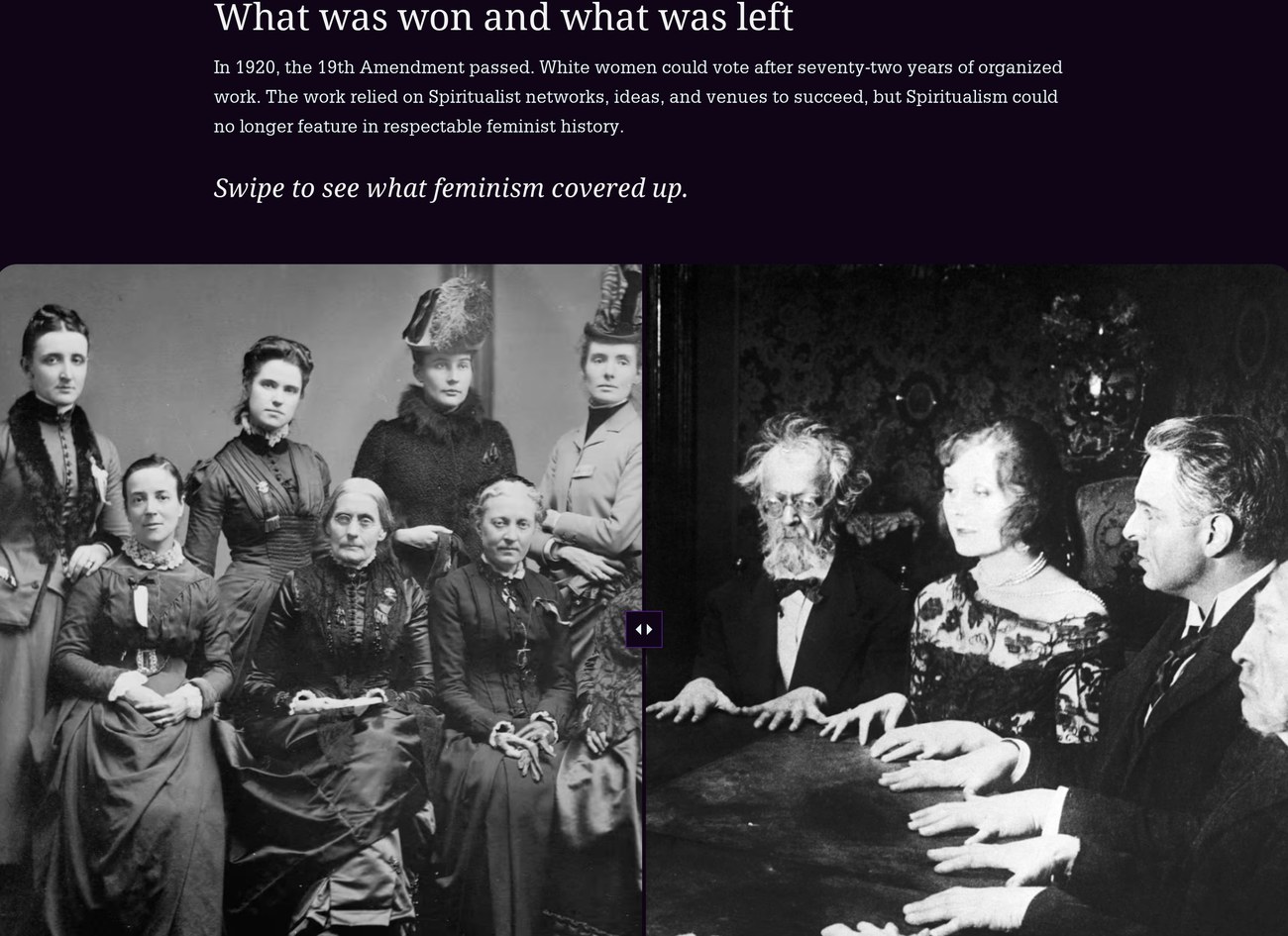
"What is feminist about ghosts?"
Spiritualism was a tool feminism "embraced, profited from, and disposed of." This class had an open-ended final project, which I used to explore a passion of mine and build a portfolio piece. I am especially interested in eccentric religion and the impact of 19th-Century Upstate New York on American religion and politics.
Valuing and cultivating multiple ways of knowing and making meaning. Every panel and interactive offers more than one way in.
Lead with real evidence, then let prose explain it. Without physical objects, this exhibit uses primary sources, images, interactives, and the feeling of real space to draw visitors in.
Name a protagonist and ask questions with no single right answer instead of handing over a conclusion. This exhibit keeps meaning-making approachable and personal.
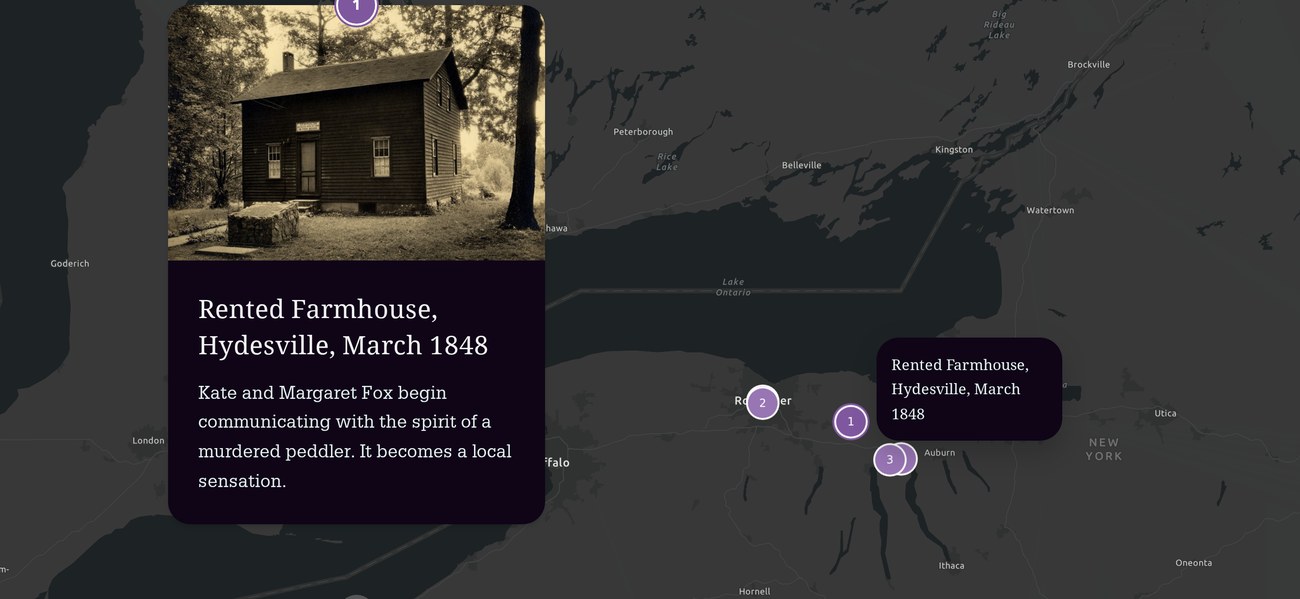
The Narrative—text and primary-source images carry the argument through like a museum exhibit. The Interactives—a map, a network graphs, and a flow diagram—let a visitor explore the argument for themselves.
Amy Post ties the exhibit together as she tied together the social network that combined abolition, feminism, and radical visions of religion. She provides an emotional core and a clear example of the thesis: a Spiritualist written out of the story until the recent publication of her papers revealed the radical reform networks of New York.
Works at different levels of attention—from a casual five-minute glance or a fifteen-minute reflection to an hour-long exploration.
There's no physical object here, so I encourge connection with objects and primary sources by asking visitors to imagine themselves inside the Post parlor.
Labels that tell you what to do, not what to think. This exhibit asks "What do you notice? Who remains?" and has no single right answer.


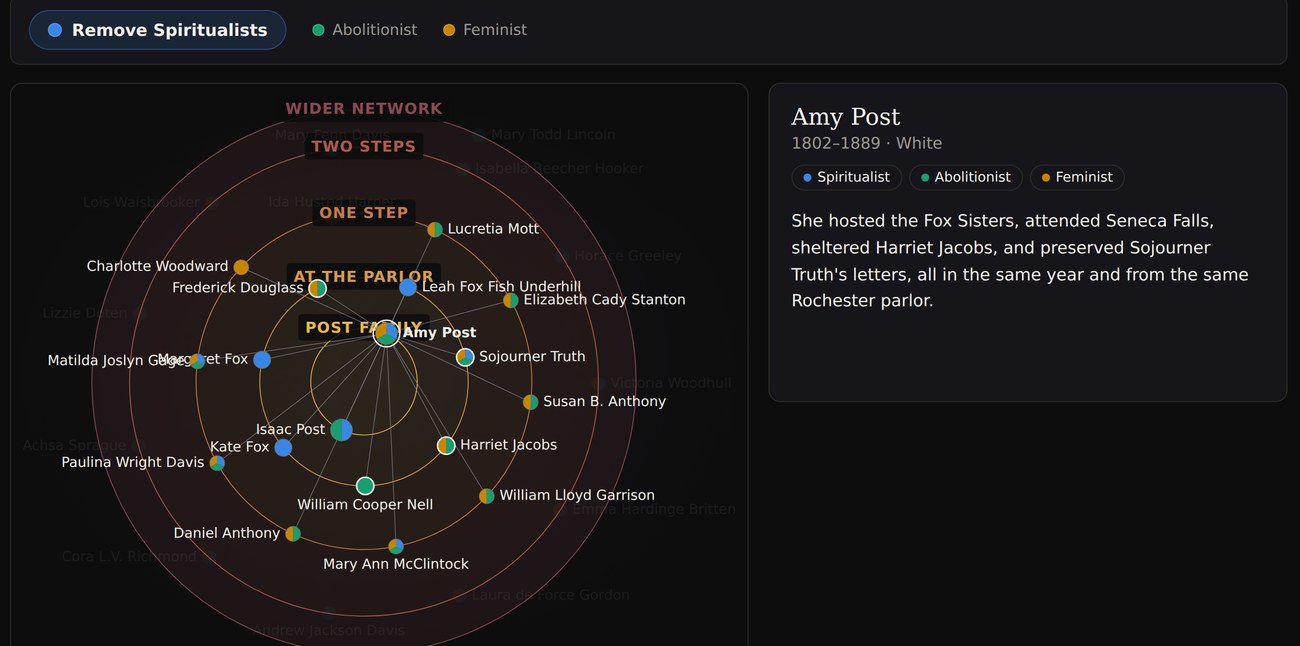
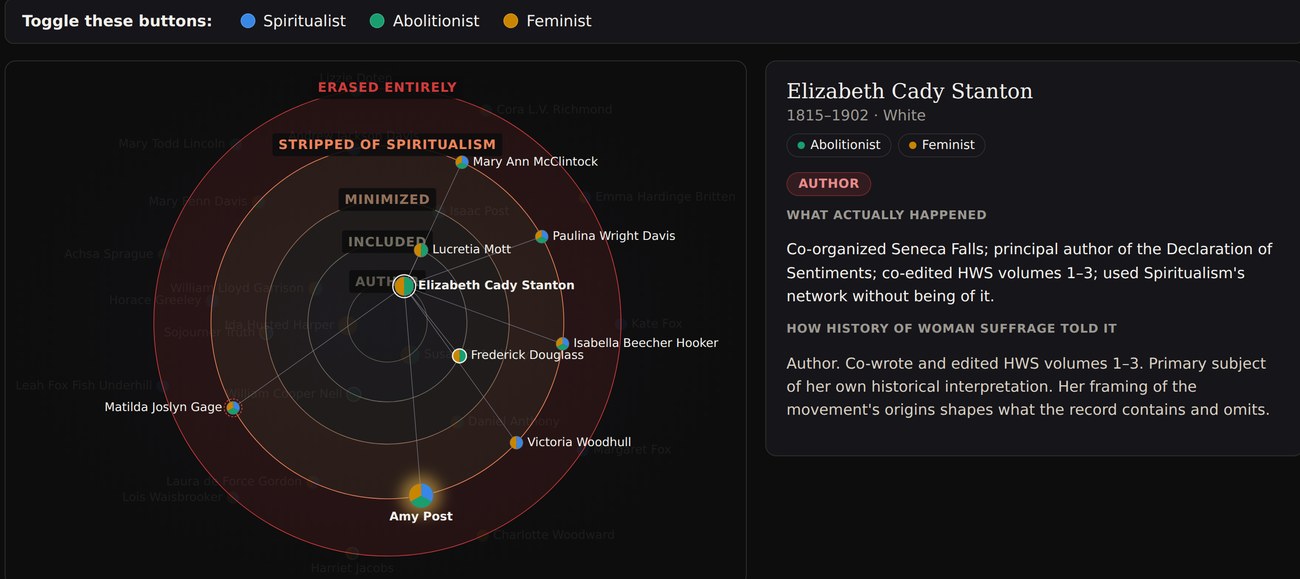
These interactive network graphs involve the visitor in the erasure of Spiritualism. Amy Post moves from a central figure to a peripheral one. The interactive allows visitors to toggle off Spiritualists—in effect erasing them firsthand.
The interactives communicate on three registers: gestalt impact, text labels, and interactive experience.
OBL calls for concrete, sourced content over abstraction. The relabeled rings—"Erased Entirely," "Stripped of Spiritualism," "Minimized"—come straight from the scholarship on how this erasure happened.
Click a node and the sidebar goes deeper: name and dates first (tombstone), then tags (thematic), then a full paragraph (extended).
This exhibit hands visitors the evidence and more than one way through it. It reverses that erasure by letting them trace the connections between feminism and Spiritualism themselves, putting back what the respectable version of the story left out.
✕ Close
✕ Close
✕ Close
✕ Close
✕ Close
✕ Close
✕ Close
✕ Close
✕ Close
✕ Close
✕ Close
✕ Close
✕ Close
✕ Close
✕ Close
✕ Close
✕ Close
✕ Close
As the Educational Intern for spring '26, I was tasked with updating the Denver Firefighter's Museum's exhibit on firefighting gear over time, which consisted of two assembled sets of firefighter gear and a small interpretive sign pointing out the names of the gear. The DFM introduced me to the pedagogies they use, and I came back with a plan to let visitors learn about gear by wearing it themselves. To my pleasant surprise, the museum was happy with the direction.